Request Demo
Last update 05 Dec 2025

Integral BioSciences Pvt. Ltd.
Last update 05 Dec 2025
Overview
Tags
Digestive System Disorders
Neoplasms
Small molecule drug
Disease domain score
A glimpse into the focused therapeutic areas

Technology Platform
Most used technologies in drug development
Targets
Most frequently developed targets
Related
Target |
Mechanism |
Active Org. |
Originator Org. |
Active Indication |
Inactive Indication |
Drug Highest Phase |
First Approval Ctry. / Loc. |
First Approval Date |

Target |
Mechanism |
Active Org. |
Originator Org. |
Active Indication |
Inactive Indication |
Drug Highest Phase |
First Approval Ctry. / Loc. |
First Approval Date |
100 Clinical Results associated with Integral BioSciences Pvt. Ltd.
Login to view more data
Login to view more data
01 Sep 2025BIOORGANIC CHEMISTRY
Dual inhibition of AXL and MER kinase: scope for lung and breast cancer therapeutics
Review
Author: Singh, Shareen ; Bushi, Ganesh ; Kumari, Pratibha ; Kumar, Roshan ; Mudududdla, Ramesh ; Baell, Jonathan ; Dwivedi, Ashish R ; Sathe, Balaji Dashrath ; Pathak, Prateek ; Mane, Madhav Shivaji ; Kommi, Damodara N ; Kumar, Hemant ; Pawar, D K
Cancer cells use multiple survival pathways for continuous proliferation, survival, and growth. Recent anticancer drug discovery commonly focuses on a single target that maintains key cancer cell survival mechanisms, where typically, this is a cellular enzyme that inhibits DNA replication, inducing cell damage and apoptosis. Since drugs that act on a single target may be more susceptible to the development of resistance, the search for polypharmacotherapeutics is becoming increasingly popular to defeat drug-resistant cancer cells. Receptor tyrosine kinases (RTKs) family members, AXL and MER, have been identified as important cancer targets and found to be overexpressed and associated with various forms of cancers, such as lung and breast cancers. This review has focused on the dual inhibition of AXL and MER kinases as a strategy for treating lung and breast cancer. The roles of these two kinases in non-small cell lung cancer (NSCLC) are such that dual inhibition would be therapeutically complementary, with MER inhibition more fully blocking tumor growth while AXL inhibition encourages chemosensitivity. Hence, treatment strategies targeting both of these RTKs may be more effective and beneficial than singly targeted agents, and a dual AXL/MER inhibitor is a potential therapy for NSCLC along with breast cancer. This review highlights the preclinical and clinical development of dual AXL and MER kinase inhibitors as lung and breast cancer treatments and the prospects for their future progression.
03 Apr 2025DRUG DEVELOPMENT AND INDUSTRIAL PHARMACY
A novel synthetic approach for the piperazynyl pyrimidine intermediate: focus on the cost cutting of buspirone drug at commercial level
Article
Author: Tripathy, Divya Bajpai ; Nayak, Anjan Kumar ; Sharma, Gaurav ; Pendharkar, Dhananjay ; Sharma, Vijay Kumar
BACKGROUND:
Buspirone is a critical in treatment for generalized anxiety disorder (GAD), but the synthesis of its key intermediate, 2-(piperazin-1-yl) pyrimidine faces challenges in terms of cost, yield and purity. Traditional synthesis methods are hindered by high material costs and significant by-product formation, necessitating a more efficient and economical approach.
OBJECTIVE:
To develop a novel, cost-effective synthesis strategy for the 2-(piperazin-1-yl) pyrimidine intermediate that improves yield and purity while reducing production costs and environmental impact.
METHODS:
A four-step synthesis process was optimized as follows: First, piperazine reacts with sulfuric acid and cyanamide, followed by precipitation with cold methanol. Next, 1,1,3,3-tetramethoxypropane reacts with hydrochloric acid and amidine, and the mixture was extracted with dichloromethane (DCM). In the third step, the product was dissolved in isopropanol (IPA), treated with charcoal and converted to the oxalate salt using oxalic acid. Finally, the oxalate salt was converted to the freebase with ammonia, followed by a final extraction with DCM. Key variables such as reagent equivalents, reaction conditions and purification techniques were systematically optimized throughout the process.
RESULTS:
The optimized process achieved a purity level of over 99% and reduced production costs by 25-30%. Significant improvements included controlled bis-product formation with cyanamide, effective addition of 1,1,3,3-tetramethoxypropane and efficient removal of by-products through oxalate salt formation and charcoal treatment.
CONCLUSION:
The developed synthesis method for 2-(piperazin-1-yl) pyrimidine was both cost-effective and efficient, significantly enhancing the yield and purity. This method is highly suitable for large-scale pharmaceutical production, aligning with industry goals of improved process efficiency, cost reduction and environmental sustainability.
01 Dec 2024Chemical Biology & Drug Design
Design and Development of Novel Hybrids Based on Pyrrolo[2,1‐f][1,2,4]Triazine and 1‐(Methylpiperidin‐4‐yl) Aniline–Based Analogs: Exploring the Utility as Anticancer Agents via MERTK Inhibition
Article
Author: Kumar, Bhupinder ; Dwivedi, Ashish Ranjan ; Rawat, Pramod ; Sathe, Balaji Dashrath ; Rathod, S. V. ; Kumar, Devendra ; Nainwal, Nidhi ; Jaiswal, Shivani ; Yadav, Savita ; Singh, Thakur Gurjeet
ABSTRACT:
Mer‐tyrosine kinase (MERTK), a member of the AXL, TYRO3, and MERTK (TAM) family, is one of the promising targets for cancer treatment. It plays a key role in cancer cell survival and proliferation and regulates immune responses in cancer. The study aimed to rationally design and develop molecules considering the pharmacophoric requirements of MERTK using a multi‐synthetic approach followed by the hybridization of individual pharmacophores. A hybrid drug design approach was employed by hybridization of pyrrolo[2,1‐f][1,2,4]triazine and 1‐(methylpiperidin‐4‐yl)aniline pharmacophoric systems to develop novel leads (1K1–1K5). The molecules were synthesized via a multi‐step synthetic approach. The synthesized molecules were assessed for their pharmacological potential via cell viability, drug metabolism and pharmacokinetics (DMPK), and MERTK inhibition studies corroborated by in silico studies. IK5 was found to have an IC50 value of 0.36 μM towards A549, followed by 0.42 μM and 0.80 μM against MCF‐7 and MDA‐MB‐231 cells, respectively. Further, the molecules were also analyzed for their microsomal stability and were found to be stable with better intrinsic clearance profiles. The molecules thus pave a strategy for developing novel MERTK inhibitors and their advance in vitro and in vivo assessment in the future.
100 Deals associated with Integral BioSciences Pvt. Ltd.
Login to view more data
100 Translational Medicine associated with Integral BioSciences Pvt. Ltd.
Login to view more data
Corporation Tree
Boost your research with our corporation tree data.
login
or

Pipeline
Pipeline Snapshot as of 24 Dec 2025
The statistics for drugs in the Pipeline is the current organization and its subsidiaries are counted as organizations,Early Phase 1 is incorporated into Phase 1, Phase 1/2 is incorporated into phase 2, and phase 2/3 is incorporated into phase 3
Preclinical
2
Login to view more data
Current Projects
Login to view more data
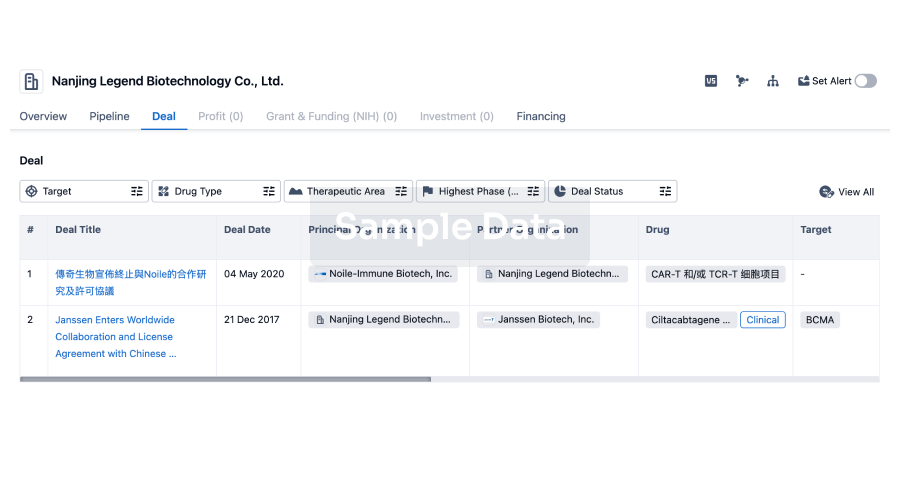
Deal
Boost your decision using our deal data.
login
or
Translational Medicine
Boost your research with our translational medicine data.
login
or

Profit
Explore the financial positions of over 360K organizations with Synapse.
login
or

Grant & Funding(NIH)
Access more than 2 million grant and funding information to elevate your research journey.
login
or

Investment
Gain insights on the latest company investments from start-ups to established corporations.
login
or

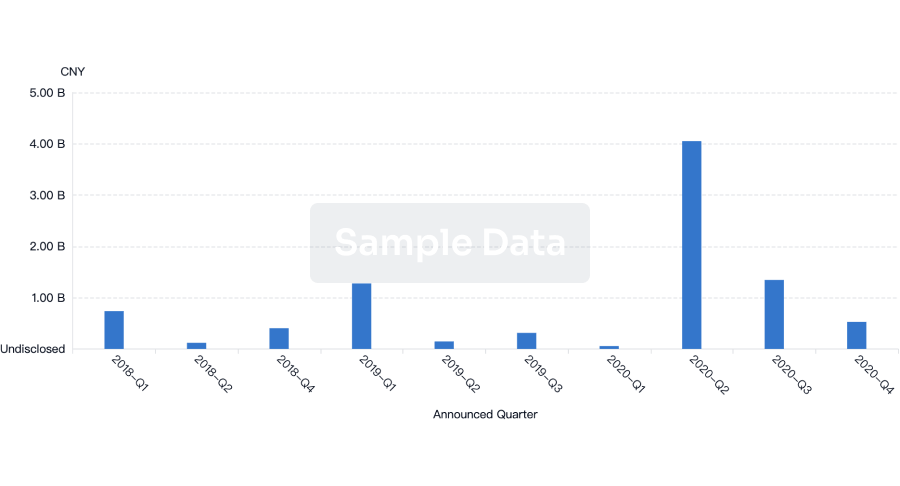
Financing
Unearth financing trends to validate and advance investment opportunities.
login
or
AI Agents Built for Biopharma Breakthroughs
Accelerate discovery. Empower decisions. Transform outcomes.
Get started for free today!
Accelerate Strategic R&D decision making with Synapse, PatSnap’s AI-powered Connected Innovation Intelligence Platform Built for Life Sciences Professionals.
Start your data trial now!
Synapse data is also accessible to external entities via APIs or data packages. Empower better decisions with the latest in pharmaceutical intelligence.
Bio
Bio Sequences Search & Analysis
Sign up for free
Chemical
Chemical Structures Search & Analysis
Sign up for free