Request Demo
Last update 08 Dec 2025

Asociación Centro de Investigación Cooperativa en Biociencias
Last update 08 Dec 2025
Overview
Tags
Skin and Musculoskeletal Diseases
Other Diseases
Congenital Disorders
Small molecule drug
Disease domain score
A glimpse into the focused therapeutic areas
Technology Platform
Most used technologies in drug development
Targets
Most frequently developed targets

No Data
Related
Target |
Mechanism |
Active Org. |
Originator Org. |
Active Indication |
Inactive Indication |
Drug Highest Phase |
First Approval Ctry. / Loc. |
First Approval Date |

NCT06770907
Genetic Carbohydrate Maldigestion As a Model to Study Food Hypersensitivity Mechanism and Guide Personalised Treatment Using a Non-invasive Multiparametric Test (WORK PACKAGE 2)

NCT03687138
Searching for Diagnostic/Prognostic Biomarkers in Systemic Lupus Erythematosus (SLE) With Renal Involvement by Proteomic Techniques. A Multicentre Study
EUCTR2015-002836-42-ES
Phase II Pilot Study to assess security, potential feasibility and effectiveness of treatment with platelet rich plasma in vascular ulcers iwth difficult healing in lower extremities. - Effectiveness and securyty with platelet rich plasma in ulcers.
100 Clinical Results associated with Asociación Centro de Investigación Cooperativa en Biociencias
Login to view more data
Login to view more data
01 Dec 2025ARCHIVES OF BIOCHEMISTRY AND BIOPHYSICS
Retraction notice to “WNK1 phosphorylation sites in TBC1D1 and TBC1D4 modulate cell surface expression of GLUT1” [Arch. Biochem. Biophys. 679 (2020) 108223]
Article
Author: Elortza, Felix ; Azkargorta, Mikel ; Carvalho, Ana Sofia ; Henriques, Andreia F A ; Matthiesen, Rune ; Jordan, Peter ; Matos, Paulo
24 Oct 2025Science Advances
Metabolic dysfunction–associated steatotic liver disease alters brain function and behavior: Insights from liver-targeted siRNA therapy
Article
Author: Crespo-Facorro, Benedicto ; Gil-Pitarch, Clàudia ; Martínez-Chantar, María Luz ; Romero Gómez, Manuel ; Rejano Gordillo, Claudia M. ; Moncho-Amor, Verónica ; Cardoso Delgado, Teresa ; Conter, Carolina ; Zapata-Pavas, L. Estefanía ; Martín-Cuevas, Celia ; Elortza, Felix ; Crespo, Javier ; Martínez-Cruz, Luis Alfonso ; Azkargorta, Mikel ; Nogueiras, Rubén ; Matheu, Ander ; Goikoetxea-Usandizaga, Naroa ; Barrenechea-Barrenechea, Jon Ander ; Landa, Jon ; González-Recio, Irene ; Sánchez Hidalgo, Ana C. ; Ramos Herrero, Víctor D. ; Gil Gómez, Antonio ; Gallego Durán, Rocío
Metabolic dysfunction–associated steatotic liver disease (MASLD), a liver-centric condition, is associated with cognitive impairment and sensorimotor alterations. However, it remains unclear whether MASLD is sufficient to drive central nervous system deficits. Here, using diet-induced mouse models, we showed that MASLD was associated with alterations in social memory, sensorimotor processing, and hippocampal function, including decreased parvalbumin-positive interneurons, reduced dendritic spine density, and diminished dentate gyrus neurogenesis and neuronal differentiation. Then, we selectively modulated liver metabolism through
N
-acetylgalactosamine small interfering RNA (siRNA) therapy against Cyclin M4 (
CNNM4
), a magnesium transporter dysregulated in MASLD. Liver-specific intervention with siRNA-
Cnnm4
reversed impaired social memory and sensorimotor processing in association with recovery of hippocampal synaptogenesis and mitochondrial function pathways, alongside activation of neurogenesis-associated transcriptional programs. Our findings demonstrate that liver pathology is sufficient to drive neurobehavioral and hippocampal dysfunction in MASLD. Hepatic-specific intervention restores brain function, strongly supporting the existence of a causal and therapeutically targetable liver-brain axis for MASLD-associated neurological complications.
01 Oct 2025NATURE BIOTECHNOLOGY
A resurrected ancestor of Cas12a expands target access and substrate recognition for nucleic acid editing and detection
Article
Author: Samperio, Sara ; Abascal-Palacios, Guillermo ; Gonzalez-Lopez, Monika ; Ubarretxena-Belandia, Iban ; Beisel, Chase L ; Jabalera, Ylenia ; Perez-Jimenez, Raul ; Aransay, Ana M ; Tascón, Igor ; López-Alonso, Jorge P
The properties of Cas12a nucleases constrict the range of accessible targets and their applications. In this study, we applied ancestral sequence reconstruction (ASR) to a set of Cas12a orthologs from hydrobacteria to reconstruct a common ancestor, ReChb, characterized by near-PAMless targeting and the recognition of diverse nucleic acid activators and collateral substrates. ReChb shares 53% sequence identity with the closest Cas12a ortholog but no longer requires a T-rich PAM and can achieve genome editing in human cells at sites inaccessible to the natural FnCas12a or the engineered and PAM-flexible enAsCas12a. Furthermore, ReChb can be triggered not only by double-stranded DNA but also by single-stranded RNA and DNA targets, leading to non-specific collateral cleavage of all three nucleic acid substrates with similar efficiencies. Finally, tertiary and quaternary structures of ReChb obtained by cryogenic electron microscopy reveal the molecular details underlying its expanded biophysical activities. Overall, ReChb expands the application space of Cas12a nucleases and underscores the potential of ASR for enhancing CRISPR technologies.
100 Deals associated with Asociación Centro de Investigación Cooperativa en Biociencias
Login to view more data
100 Translational Medicine associated with Asociación Centro de Investigación Cooperativa en Biociencias
Login to view more data
Corporation Tree
Boost your research with our corporation tree data.
login
or

Pipeline
Pipeline Snapshot as of 20 Dec 2025
The statistics for drugs in the Pipeline is the current organization and its subsidiaries are counted as organizations,Early Phase 1 is incorporated into Phase 1, Phase 1/2 is incorporated into phase 2, and phase 2/3 is incorporated into phase 3
Preclinical
1
Login to view more data
Current Projects
Login to view more data
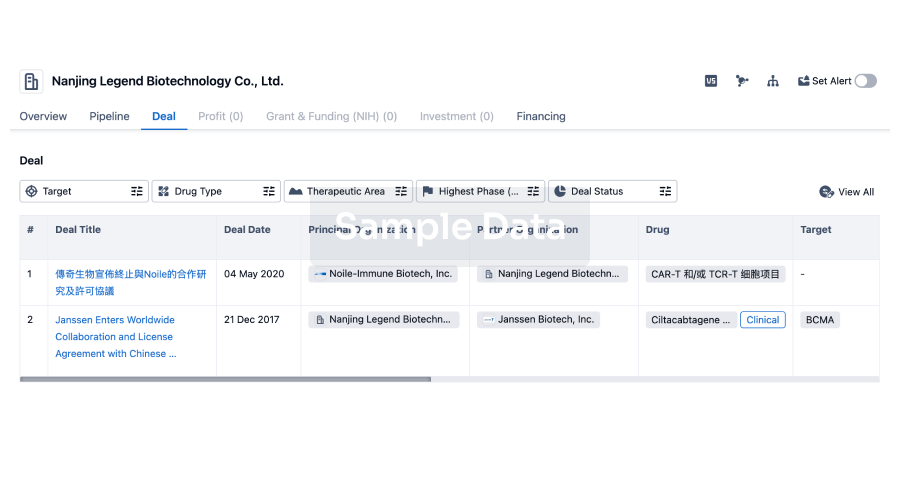
Deal
Boost your decision using our deal data.
login
or
Translational Medicine
Boost your research with our translational medicine data.
login
or

Profit
Explore the financial positions of over 360K organizations with Synapse.
login
or

Grant & Funding(NIH)
Access more than 2 million grant and funding information to elevate your research journey.
login
or

Investment
Gain insights on the latest company investments from start-ups to established corporations.
login
or

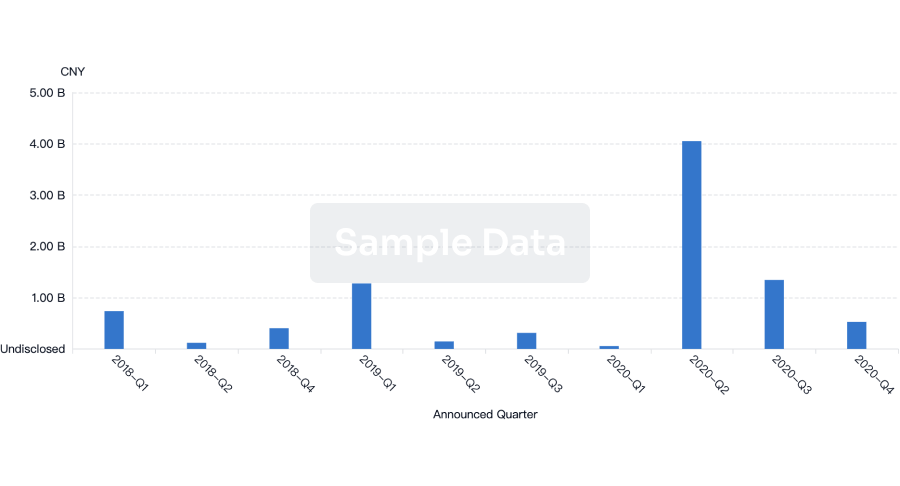
Financing
Unearth financing trends to validate and advance investment opportunities.
login
or
AI Agents Built for Biopharma Breakthroughs
Accelerate discovery. Empower decisions. Transform outcomes.
Get started for free today!
Accelerate Strategic R&D decision making with Synapse, PatSnap’s AI-powered Connected Innovation Intelligence Platform Built for Life Sciences Professionals.
Start your data trial now!
Synapse data is also accessible to external entities via APIs or data packages. Empower better decisions with the latest in pharmaceutical intelligence.
Bio
Bio Sequences Search & Analysis
Sign up for free
Chemical
Chemical Structures Search & Analysis
Sign up for free